


A Natural Indicator of Ecological Health and Sustainable Landscapes
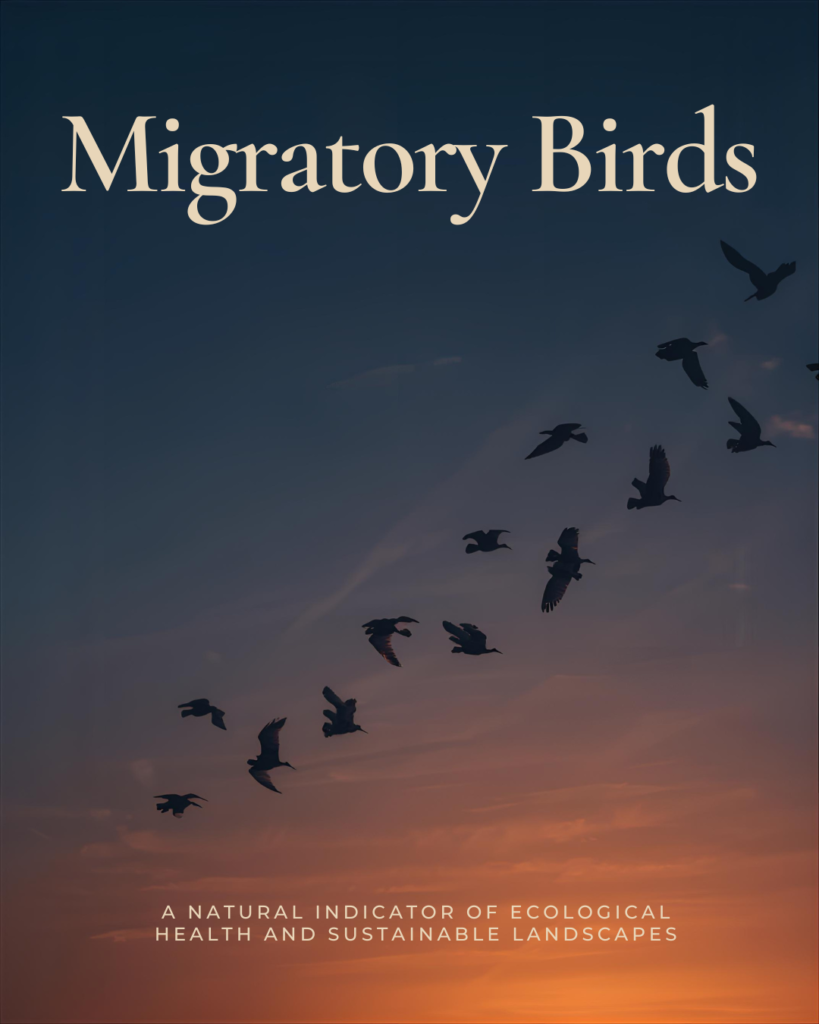
Migratory birds represent one of nature’s most remarkable survival strategies. Their long-distance journeys across continents are not driven by comfort but by the need for food, suitable climate, and safe breeding habitats. For conservation organisations and CSR stakeholders, migratory birds serve as powerful indicators of ecosystem health, wetland sustainability, and climate resilience.
Protecting migratory birds directly contributes to biodiversity conservation, water security, sustainable agriculture, and community livelihoods.
Understanding Migratory Birds
Birds occupy nearly every ecosystem on Earth. Resident birds remain within a limited geographic region throughout the year, adapting to seasonal changes in forests, grasslands, wetlands, farmlands, and urban areas.
In contrast, migratory birds move seasonally across regions and continents in response to climatic conditions, food availability, and breeding requirements. Migration is an essential biological process embedded in their life cycle.
- Global scenario: ~10,000 bird species, ~1,800 migratory
- India: ~1,400 bird species, ~450 migratory
- Karnataka: ~570 bird species, ~90 migratory
Despite their relatively smaller numbers, migratory birds play a disproportionately large role in maintaining ecological balance.
Flyways and India’s Strategic Importance
Migratory birds follow established routes known as flyways. Of the eight major flyways globally, India lies along the Central Asian Flyway, making it a critical wintering and stopover region.
Through this flyway, birds migrate from Europe, Russia, Mongolia, Kazakhstan, Turkey, and Central Asia to warmer regions of South Asia during winter. Most migratory birds arrive in India between October and November and return to their breeding grounds by February or March.
India’s wetlands, rivers, reservoirs, and post-harvest agricultural fields provide essential feeding and resting habitats during this period.
Key Migratory Bird Habitats in Karnataka
Karnataka hosts several ecologically significant wetlands that support migratory bird populations during winter.
Important sites include Ranganathittu Bird Sanctuary, Magadi Lake, the Tungabhadra backwaters, and the Almatti reservoir.
Magadi Lake alone supports 3,000–10,000 Bar-headed Geese annually, highlighting its importance at an international scale. Such wetlands contribute to biodiversity conservation while also supporting fisheries, groundwater recharge, and local livelihoods.
Migration: Preparation, Endurance, and Navigation
Migration demands extraordinary endurance. As seasons change, birds increase food intake and store fat reserves to fuel long flights. In some species, body weight nearly doubles before migration.
Birds navigate using a combination of:
- The sun, moon, and stars
- The Earth’s magnetic field
- Geographical landmarks such as rivers and mountain ranges
- Highly developed visual and spatial memory
These abilities allow birds to return to the same habitats year after year with remarkable accuracy.
Extraordinary Migratory Journeys
Some migratory journeys are among the longest in the animal kingdom:
- The Arctic Tern travels between the Arctic and Antarctic, covering up to 90,000 km annually
- The Bar-tailed Godwit achieved a record non-stop flight of 11 days without rest
Indian wetlands regularly host flamingos, ducks, pintails, godwits, river terns, and pratincoles during winter.
Monitoring and Scientific Research
Migration research has evolved from traditional leg banding to advanced satellite-based GPS telemetry. Lightweight tracking devices now enable scientists to study:
- Migration routes and timing
- Stopover and wintering habitats
- Habitat dependency and climate impacts
Such data is crucial for evidence-based conservation planning and policy advocacy.
Threats to Migratory Birds
Migratory birds face increasing risks across their global journeys:
- Wetland degradation and encroachment
- Industrial and agricultural pollution
- Excessive pesticide use and declining insect populations
- Illegal hunting and poaching
- Disturbance at nesting and roosting sites
- Climate-induced habitat shifts
These threats underline the need for integrated conservation approaches involving governments, NGOs, communities, and corporate partners.
Conservation and Community Engagement
Conservation efforts focus on habitat protection, restoration, and sustainable management. Wetlands of international importance are recognised as Ramsar Sites, receiving global attention and protection.
In Karnataka, Ramsar-designated sites include Ranganathittu Bird Sanctuary, Magadi Lake, the Aghanashini estuary, and Ankasamudra.
Community participation is central to conservation success. Local volunteers, birdwatchers, research institutions, and forest departments collaborate to monitor bird populations, regulate human disturbance, and document ecological changes.
Why Migratory Birds Matter for CSR
Migratory birds are living indicators of environmental health. Their presence reflects clean water, healthy wetlands, balanced food chains, and climate stability.
CSR investments in wetland conservation, biodiversity monitoring, habitat restoration, and community stewardship:
- Strengthen ecosystems and climate resilience
- Support water security and sustainable agriculture
- Enhance biodiversity outcomes aligned with SDGs
- Create long-term environmental and social value
Conclusion
Migratory birds connect continents through shared natural pathways. Their survival depends on the collective responsibility of nations, institutions, communities, and responsible corporate action.
Protecting migratory birds is not just about conserving wildlife – it is about safeguarding ecosystems, sustaining livelihoods, and securing a healthier planet for future generations.